
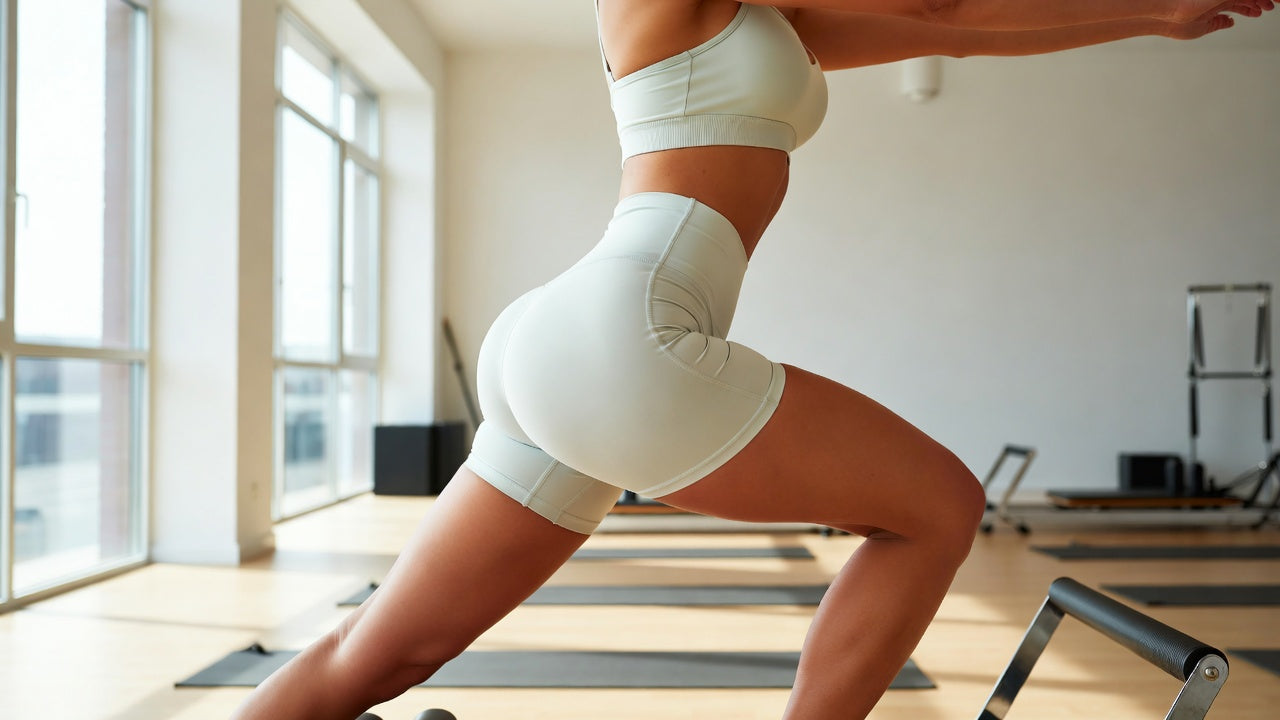
Finding the right outfit for Pilates can change how you move, stretch, and feel during class. When clothing shifts, digs in, or traps sweat, it pulls your focus away from your workout. That is why many women are turning to boyshorts for pilates sessions as a smart, supportive option.
Boyshorts for pilates sessions are fitted, short-style bottoms inspired by men’s boxer briefs. They offer full hip coverage with straight-cut leg openings and usually feature a mid-rise or high-rise waistband. Made with stretch performance fabrics, they move with your body through reformer work, mat exercises, and core sequences. The design supports muscle control while staying comfortable against the skin.
In this guide, we will break down fabric needs, fit details, length options, benefits, and what to avoid before buying your next pair.
Boyshorts for Pilates Sessions: Smart Features

Boyshorts are designed to balance coverage and freedom. They sit securely on the waist while offering more fabric than traditional briefs, yet less bulk than loose shorts.
Key design elements include:
- Fitted, short-style cut inspired by boxer briefs
- Full hip coverage for confident movement
- Straight-cut leg openings that sit smoothly against the thighs
- Mid-rise or high-rise waistbands for better stability
This shape works especially well in Pilates because it stays close to the body. Instructors can easily see hip alignment and muscle engagement, which helps improve form.
Fabric That Supports Movement
Pilates involves controlled stretches, slow transitions, and full-body engagement. Fabric matters more than most people think.
Look for these features:
- 4-way stretch to allow unrestricted motion during reformer and mat exercises
- Moisture-wicking material to keep skin dry in heated or intense sessions
- Breathable fibers such as nylon and spandex blends or performance polyester
- Soft hand feel to prevent irritation during floor work
When fabric stretches and recovers properly, it supports muscle control without sagging or pulling. Softness is also important because many Pilates exercises involve lying on your back or stomach.
Fit and Construction Details That Matter
The right fit can improve both comfort and performance. Poor construction can distract you throughout class.
Here is what to look for:
High-rise waistband
- Provides gentle core support
- Prevents rolling during roll-ups and teaser movements
Snug but non-restrictive compression
- Supports muscle stability
- Avoids digging into the thighs
Flatlock or seamless stitching
- Reduces chafing
- Improves comfort when lying down
Stay-put leg openings
- Prevent riding up during leg circles and bridges
Well-made boyshorts should feel secure without squeezing. You should be able to bend, stretch, and rotate without adjusting them.
Functional Benefits in the Studio
Boyshorts are practical for both mat and equipment-based sessions. Their close fit allows clean transitions between exercises.
They support:
- Full range of motion for lunges and leg lifts
- Smooth movement on reformers and Cadillac machines
- Clear visibility of hip alignment for better posture correction
- Less excess fabric compared to loose shorts
- Comfortable contact with the mat and equipment
Because there is less bulk, fabric does not bunch during floor contact. That makes exercises like bridges, planks, and side-lying leg work more comfortable.
Choosing the Right Length

Length affects both comfort and confidence. Different inseams serve different needs.
Consider these options:
2 to 4 inch inseam
- Offers greater freedom
- Slightly increases mobility
4 to 6 inch inseam
- Provides more thigh coverage
- Helps reduce inner-thigh friction
Choose your length based on your studio environment and personal comfort level. Warmer studios may feel better with shorter inseams, while longer options offer added coverage and anti-chafe protection.
When Boyshorts Work Best
Boyshorts are not just about style. They serve specific training situations well.
They are ideal for:
- Heated or high-intensity Pilates sessions
- Studios in warm climates
- Advanced practitioners who prioritize mobility
- Layering under skirts or loose shorts
If you sweat heavily or prefer minimal layers, this style can feel lighter and more breathable than traditional leggings.
What to Avoid Before Buying
Not all boyshorts are made for performance. Some are better suited for lounging than workouts.
Avoid:
- Thin cotton fabric that lacks stretch and moisture control
- Loose waistband construction that shifts during core work
- Decorative seams that cause friction
- Low-rise cuts that slide during roll-downs
Choosing true performance materials ensures comfort and durability in the studio.
Conclusion
Choosing the right boyshorts for pilates sessions can improve comfort, mobility, and focus during class. With the right fabric, proper fit, supportive waistband, and smart length choice, these fitted bottoms help you move freely while maintaining alignment and control. When you invest in quality construction and performance materials, you create a smoother studio experience from warm-up to cooldown.
Frequently Asked Questions
Are boyshorts better than leggings for Pilates?
It depends on preference and environment. Boyshorts offer more airflow and less bulk, which many people prefer in warm studios. Leggings provide more coverage and warmth.
Do boyshorts stay in place during reformer exercises?
High-quality pairs with strong waistbands and secure leg openings are designed to stay put during controlled movements like leg circles and bridges.
What fabric blend works best for Pilates?
Look for nylon or polyester blended with spandex. These fabrics provide stretch, breathability, and moisture control.
Can beginners wear boyshorts to class?
Yes. As long as the fit is secure and comfortable, beginners can benefit from the freedom of movement they provide.
Share:
Breathable Thongs for Yoga: 9 Comfort Factors
Sports Bralette for HIIT Training: 9 Key Features