
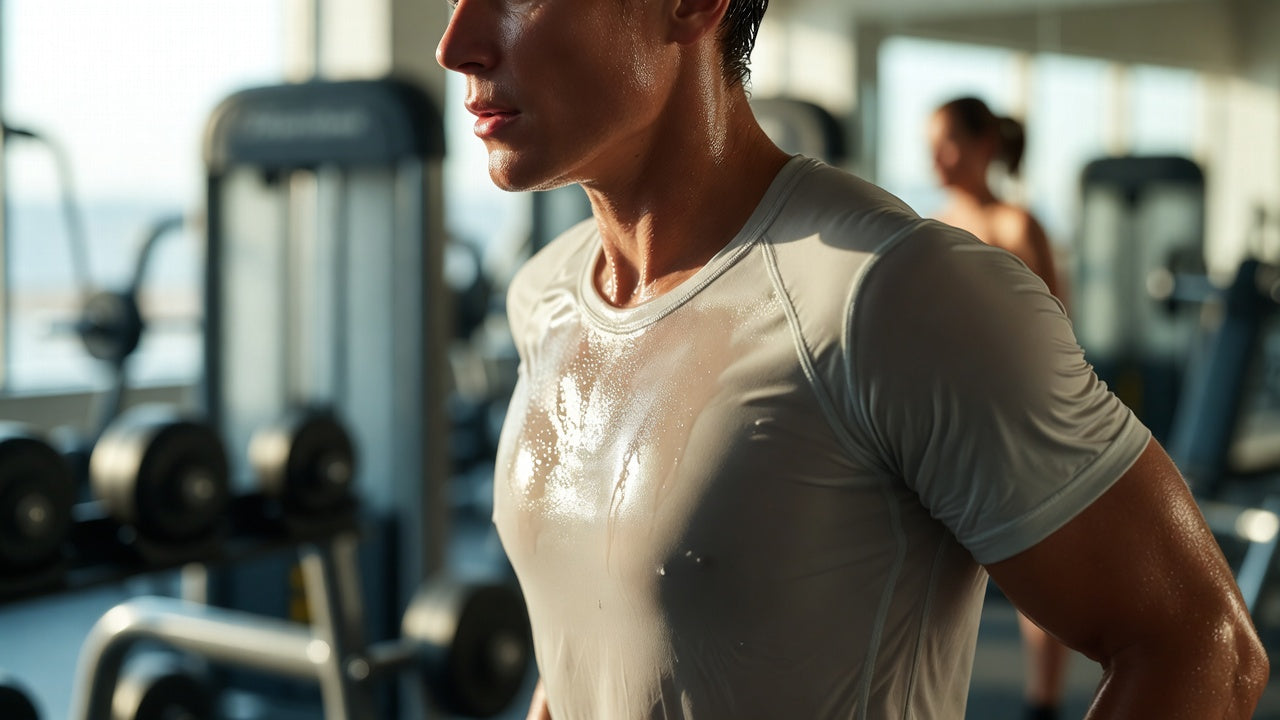
Sweat is part of training. But staying soaked through your session is not. The right shirt can make the difference between feeling focused and feeling distracted by heavy, sticky fabric.
Moisture-wicking t-shirts for training are performance tops made with special fabric technology that pulls sweat away from your skin to the outer layer of the shirt.
Instead of trapping moisture, the material spreads it out so it can dry faster.
This helps keep your body dry, cool, and comfortable during exercise, especially when intensity rises.
In this guide, we will break down how moisture-wicking shirts work, what they are made of, how to choose the right fit, and why they matter for serious training.
Moisture Wicking T-Shirts for Training: 8 Key Facts

When people hear “moisture wicking,” they often think it just means breathable. It is more specific than that.
Moisture-wicking fabric is designed to pull sweat away from your skin and move it to the outer surface of the shirt. Once there, the moisture spreads out and evaporates faster. This process helps prevent that heavy, soaked feeling during workouts.
Unlike cotton, which absorbs sweat and holds onto it, performance fabrics are built to keep moisture moving.
Core Fabric Materials Used in Performance Shirts
The fabric is the foundation of any training shirt. Different materials affect how the shirt feels, stretches, and performs.
Polyester
Polyester is the most common fabric used in performance training gear. It is popular for good reason.
- Lightweight feel
- Durable under repeated washing
- Quick drying
- Strong moisture transport
Polyester holds its shape well and handles intense training without breaking down easily.
Nylon
Nylon offers a slightly smoother and softer feel compared to polyester.
- Smooth texture against the skin
- Strong and abrasion-resistant
- Good moisture management
It is often used in premium athletic wear where comfort and durability are both priorities.
Polyester and Spandex Blend
When stretch matters, spandex is added to the mix.
- Added flexibility
- Improved mobility
- Better body contouring
This blend works especially well for dynamic training where a full range of motion is key.
Performance Features That Matter
Not all moisture-wicking shirts are built the same. Certain features separate basic athletic tees from serious training gear.
Look for:
- Strong moisture management capability
- Quick-dry technology
- Breathable construction
- Lightweight design
- Stretch and flexibility
- Odor resistance through antimicrobial treatment
- Flatlock seams reduce chafing
Flatlock seams are especially important. They sit flat against the skin and reduce rubbing during repetitive movements like running or lifting.
Fit Styles for Different Training Goals
Fit is more than just appearance. It affects airflow, sweat transfer, and comfort.
Slim Fit
Slim-fit shirts sit closer to the body.
- Close to the skin
- Efficient sweat transfer
- Ideal for high-intensity sessions
Because the fabric stays in contact with your skin, moisture can move away faster.
Regular Fit
Regular fit offers balance.
- Comfortable and relaxed
- Better airflow
- Suitable for general workouts
This is a solid option for mixed training routines.
Compression Fit
Compression shirts are tight and muscle-hugging.
- Increased skin contact
- Enhanced sweat control
- Light muscle support during training
They are often used for high-performance sports and heavy sessions.
Where Moisture Wicking Shirts Perform Best

These shirts are designed for movement and sweat. They shine in workouts where heat and intensity build quickly.
Common training uses include:
- Strength training
- HIIT workouts
- Running
- Outdoor conditioning
- Sports practice
In high-output sessions, staying dry helps maintain focus and comfort.
Fabric Construction Details That Make a Difference
Beyond material type, construction matters just as much.
Many moisture-wicking t-shirts for training use advanced knit structures such as:
- Mesh panels for airflow
- Interlock knits for smoothness and durability
Other details include:
- Microfiber technology for finer sweat channels
- Hydrophobic treatments that repel water
- Ventilation zones in high heat areas
- Strategic seam placement to reduce friction
These small design elements often separate average shirts from high performance training gear.
Why They Improve Training Comfort
Wearing the right shirt does not just feel better. It supports performance in subtle ways.
Benefits include:
- Keeps skin dry during intense sessions
- Reduces chafing
- Improves comfort in long workouts
- Enhances temperature regulation
- Faster drying after training
When your shirt is not sticking to your body, you can focus more on your reps, pace, or technique.
Care Tips to Maintain Performance
Even the best performance fabric needs proper care to last.
Follow these simple guidelines:
- Wash in cold water
- Avoid fabric softener
- Air dry or use low heat
- Do not iron performance coatings
Fabric softeners can clog moisture-wicking fibers, reducing their effectiveness over time.
Conclusion
Choosing the right training shirt may seem simple, but it has a real impact on how you feel and perform. Moisture-wicking t-shirts for training help keep your skin dry, reduce friction, and support better comfort during intense sessions. With the right fabric, fit, and care, they become a reliable part of your routine. When your gear keeps up with your effort, you can stay focused on what truly matters: getting stronger, faster, and better every time you train.
Frequently Asked Questions
Are moisture-wicking shirts better than cotton for training?
Yes. Cotton absorbs sweat and stays wet, which can feel heavy and uncomfortable. Moisture-wicking fabric moves sweat away and dries faster.
Do moisture-wicking shirts help prevent odor?
Many performance shirts include antimicrobial treatment. This helps reduce odor caused by bacteria that grow in sweat.
Should I choose slim or regular fit for gym workouts?
If you prefer a closer feel and train at high intensity, slim fit works well. For general workouts and more airflow, regular fit is a good choice.
How long do moisture-wicking shirts last?
With proper care, a high-quality shirt can last through many training cycles. Washing cold and avoiding softeners helps preserve performance.
Share:
U Bralette For Daily Stretching Routine: 7 Key Features
Anti-Chafing Boxer Briefs for Cycling: Top 5 Features & Benefits